A Bit of History
Sir Pulteney was director of The British Fishing Society and the biggest name in the fishing industry in the early 1800s. The town of Wick also used to carry his name, being previously titled as Pulteneytown. It later merged with Wick Harbour on the opposite side of the river estuary in 1902. Only then was it officially renamed Wick.
The current owners, Inver House Distillers, saw potential for its whisky in the growing single malt market and chose to promote this rather than fulfilling old blending contracts. By 2006, Old Pulteney had broken into the world’s Top 20 for single malt sales, despite its relatively low annual production capacity. It is IHD’s best-selling single malt brand.
A Bit of History
The Pulteney distillery was founded in 1826 by James Henderson. He named it after Sir William Johnstone Pulteney. At the time Wick was the ‘herring capital of Europe’ and over 1000 boats registered to its harbour. The industry employed people from all over Scotland and beyond. Henderson thought he could capitalise on this by selling his whisky to them.
Pulteney supplied the town with whisky until the herring industry collapsed during the First World War. By the end of the 1920s, unemployment in Wick was high and alcohol consumption even higher. The town council (along with over 50 other councils throughout Scotland) decided to ban the sale of alcohol and the distillery closed in 1930. The ban remained in place until 1939.
However, Pulteney did not reopen immediately and remained closed for over a decade. It was renovated and restarted in 1951 by a solicitor named Robert James ‘Bertie’ Cumming, who owned the fellow north Highland distillery of Balblair. Later in the 1950s it was sold to Hiram Walker.
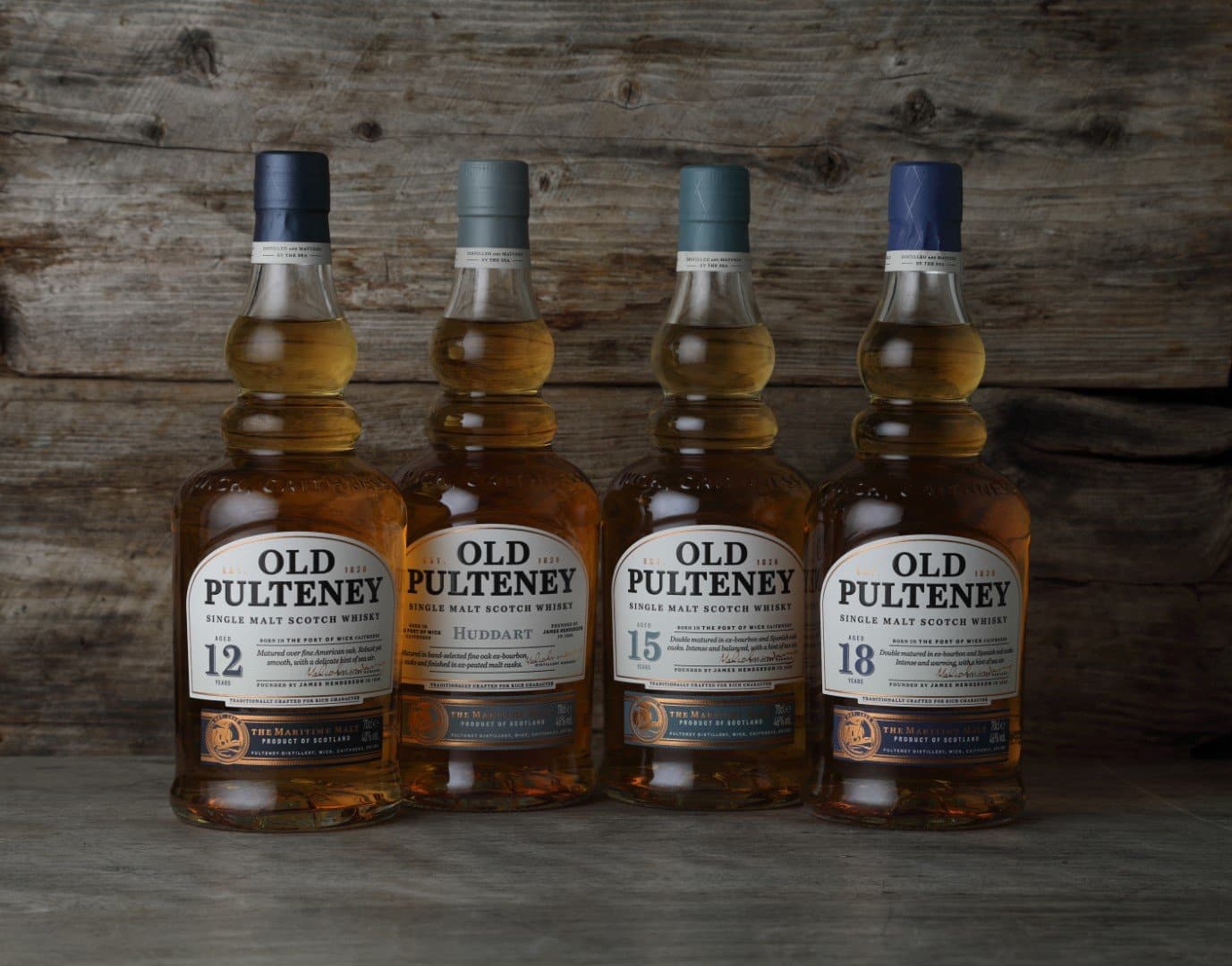
In 1995 the distillery was purchased by Inver House Distillers. They changed the name to Old Pulteney and decided to concentrate on the single malt market. The now-iconic Old Pulteney 12 Years Old expression launched a couple of years later in 1997. This decision breathed new life into the ailing distillery and put it back on the whisky map. Since, it has gone from strength to strength and now boasts a multi award-winning core domestic and travel retail range.
Background
When Pulteney was founded, it made a robust peated single malt to cater for the local taste. Over time it became less peated to the point where Hiram Walker stopped using it all together. During this era, the whisky produced there was primarily used in major blends such as Ballantine’s.
Under the ownership of Inver House Distillers, whisky is very rarely sold to blenders or independent bottlers. Modern day Old Pulteney is non-peated and known for its coastal and maritime style. The distillery and warehouse location are less than 250 metres from Wick harbour and the North Sea. This contributes to a distinct salty nature in their whisky.
The Geeky Bit
Old Pulteney is a compact distillery with an annual production capacity of 1.7 million litres. It has a 7-tonne stainless steel mash tun and operates 14 mashes per week. There are seven stainless steel washbacks with a fermentation time of 50 hours. This extends to 110 hours over weekends.
There is one pair of stills – the larger wash still for first distillation and smaller spirit still for second distillation. Both are attached to a traditional wormtub condenser – this sees copper piping spiralling down through a tank of cold water, which looks like a worm. Once the alcohol vapour hits the cold copper it condenses back to a liquid.
One To Buy | Old Pulteney 12 Years Old
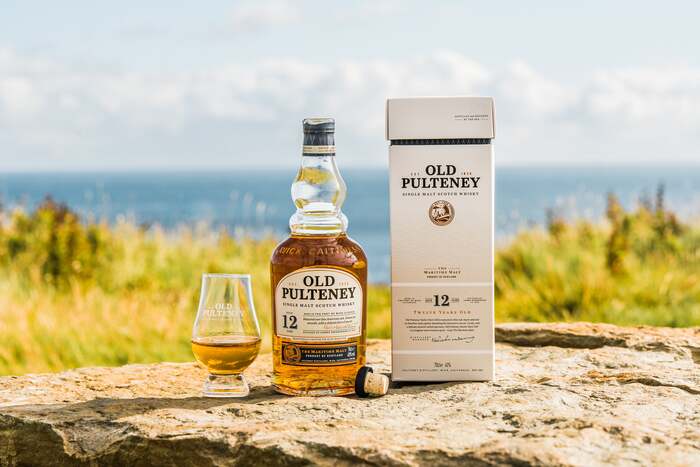
A classic Scotch single malt. The whisky is creamy and viscous with a distinct salty tang. Expect notes of vanilla, butterscotch and white chocolate from the predominant maturation in ex-bourbon casks. Further notes of honey, toasted almond, and a hint of peppery spice also come through. Easy to see why it wins plenty of awards. Simply delicious.